



Key takeaways
- Proof comes from transactions. RMNs replace research with real demand signals.
- Trust speeds adoption. Brands inside retail ecosystems face less friction.
- Speed is the edge. RMNs reward fast test, learn, and kill cycles.
- RMNs are venture launchpads. Build where revenue already exists.
For decades, retail advantage came from control: shelves, margins, distribution. That playbook built empires, but today’s customer journeys look very different.
That shift is where Retail Media Networks (RMNs) come in. RMNs operate inside the buying decision, combining intent, context, and transaction into a single connected moment:
- Bringing media, data, and commerce together in one flow
- Reducing decision effort rather than adding noise
- Delivering value that feels useful, not promotional
By 2026, global spending on retail media is expected to pass $150 billion, signalling a major shift in how brands reach and influence consumers.
For corporate innovators, RMNs represent a new venture surface within retail ecosystems, enabling teams to launch, test, and refine new propositions with real customers and real data. Let’s take a closer look at how RMNs work and what they unlock for venture builders.
What is a Retail Media Network?
A Retail Media Network (RMN) is a media platform owned and operated by a retailer that allows brands to reach customers inside the retailer’s own channels. These channels typically include:
- E-commerce sites and apps
- In-store screens and digital displays
- Retailer-owned data, search, and recommendation systems
Well-known examples of RMNs include Walmart Connect, Amazon Ads, Target Roundel, Kroger Precision Marketing, and Instacart Ads.
So, what makes RMNs different?
Retail Media Networks use first-party data to deliver relevant messages at the moment customers are actively considering what to buy.
- For brands, RMNs offer a way to influence decisions closer to conversion.
- For retailers, they unlock a new revenue stream built on data and intent.
- For corporate innovators, RMNs are live venture testbeds.
Now that we’ve covered the basics, let’s dive into why RMNs are outpacing traditional retail channels.
Reason 1: RMNs Meet Consumers at the Point of Intent
RMNs engage customers once intent becomes visible through real shopping behaviour:
- Entering a retailer’s digital or physical environment
- Searching for specific products or categories
- Comparing options, prices, or features
At this point, the customer is no longer deciding whether to buy, but what to buy. For consumers, this means faster decisions with less effort.
Example: Walmart Connect
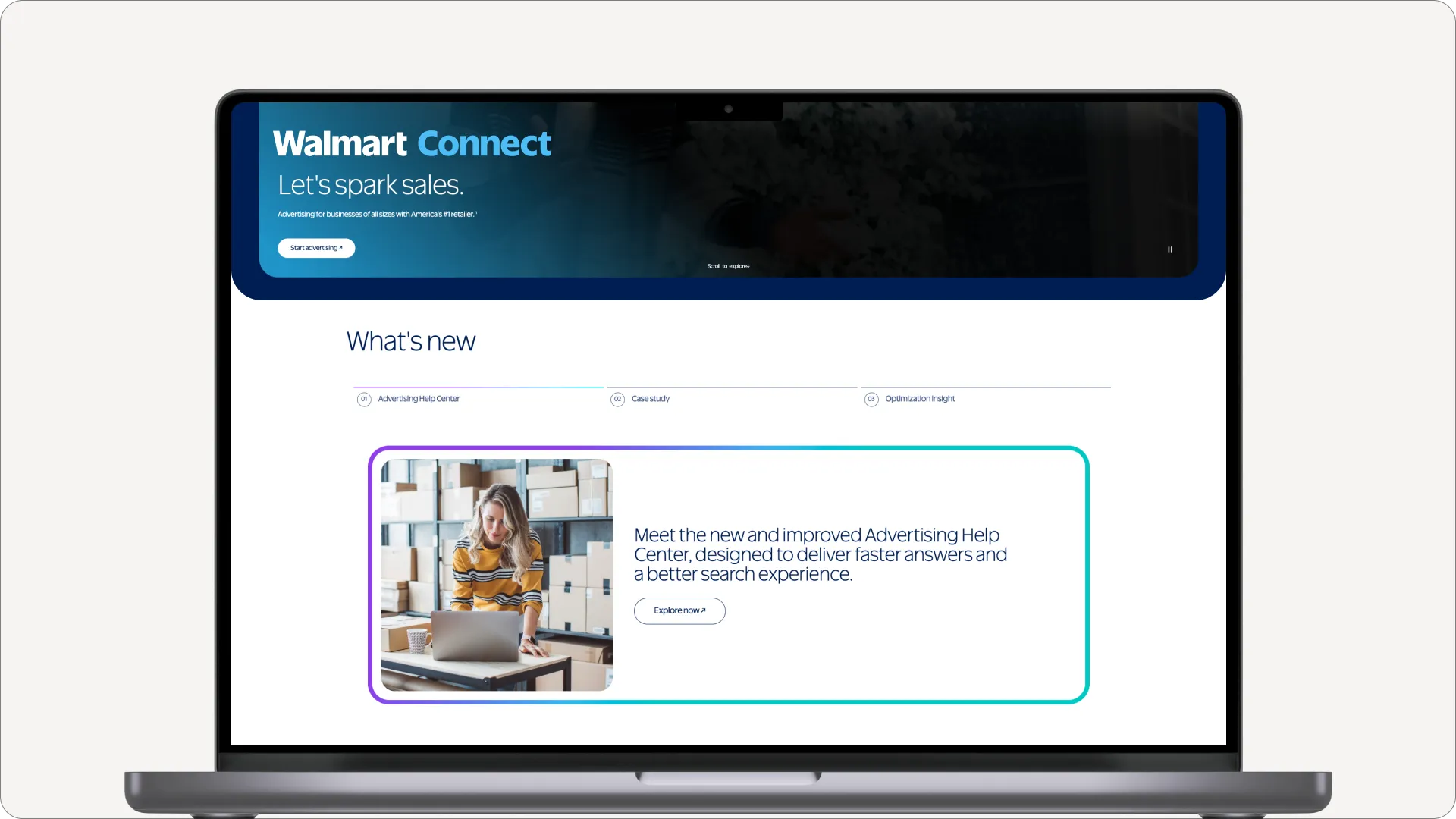
When a customer enters Walmart’s ecosystem, through the Walmart app, Walmart.com or a physical store, intent is already clear: compare options and complete a purchase.
Walmart’s RMN, Walmart Connect, operates inside that moment, placing ads across the in-store and digital journey, from entry to checkout, when customers are actively deciding what to buy.
For example, a household cleaning brand can reach shoppers who recently bought paper towels or disinfectants, surfacing a relevant option exactly when they’re considering complementary products.
In other words, RMNs don’t try to create demand. Instead, they influence choice when intent is already present, helping customers decide faster and with less effort.
Reason 2: RMNs Are Built on First-Party Data Customers Trust
RMNs run on first-party data generated directly from real shopping behaviour. This includes what customers search for, view, compare, buy, and repeat. Unlike third-party data or inferred profiles, first-party data is:
- Collected with clear context
- Directly linked to transactions
- Grounded in real intent, not assumptions
As a result, recommendations, placements, and offers make sense in the moment. They are based on what the customer is actually doing inside a trusted retail environment.
Example: Kroger Precision Marketing (KPM)
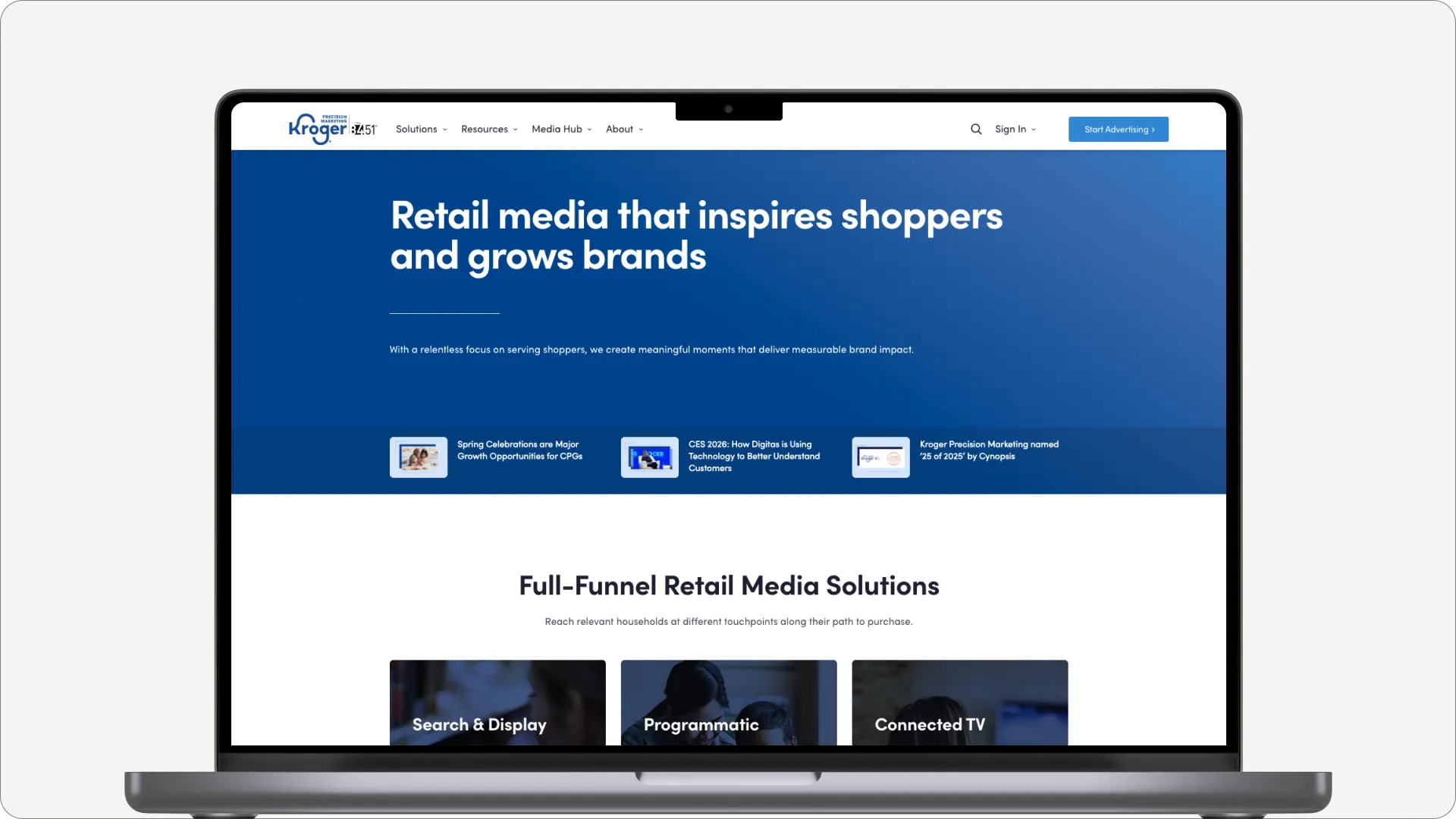
Kroger captures around 96% of its transactions through its loyalty card program, so it doesn't have to guess who a customer is based on generic internet browsing. Its RMN, Kroger Precision Marketing (KPM), uses concrete, historical shopping data to drive results:
Verified purchase intent
If a customer buys pet food every month, Kroger knows this isn’t casual interest. It’s repeat behaviour backed by real spending.
Contextually relevant placements
When an organic brand wants to reach pet owners, Kroger can place Sponsored Products directly into relevant search results while customers are actively comparing options.
Predictive Personalisation
Using data science arm 84.51°, Kroger identifies households that are 3x more valuable for brands using transaction data from over 62 million households and over 2 billion annual transactions.
Reason 3: RMNs Turn Shopping into a Media Experience
Consumers no longer separate shopping from discovery. They expect inspiration, information, and validation to happen inside the buying journey.
Retail Media Networks are built for this shift. They turn retail environments into places where reviews, recommendations, sponsored placements, and product information are all conveniently accessible in one place.
For consumers, this feels natural, with less jumping between platforms, fewer distractions, and more clarity at the moment that matters.
For corporate innovators, RMNs enable testing of content-led propositions, new formats, or brand-led experiences directly in-market. Not as campaigns, but as part of the shopping experience itself.
Example: Amazon Live
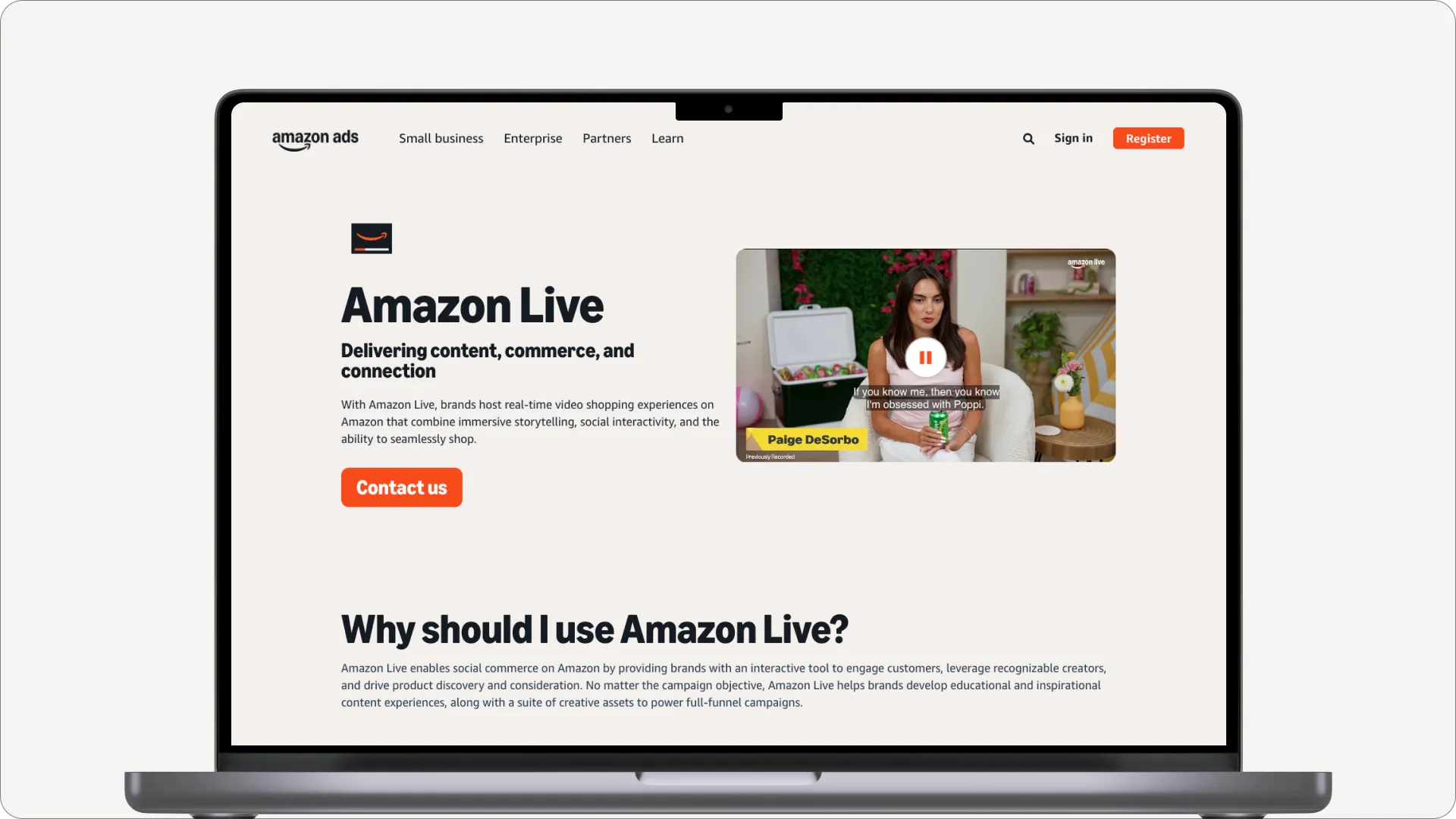
Amazon Live turns product discovery into an interactive, in-store media format.
Instead of static product pages, customers watch live streams in which influencers or brand experts demonstrate products in real time, allowing shoppers to ask questions, see products in action, and validate their choices as they decide.
Products are featured directly below the stream, allowing customers to add items to their cart and check out without leaving the experience.
For corporate innovators, Amazon Live acts as a testbed for content-led propositions. Brands like General Mills have used it to test full-funnel media strategies, seeing significant sales lifts (e.g., 5.6x) by treating content as an integral part of the store rather than an external campaign.
The payoff is simple: better understanding, higher confidence, and a higher likelihood of purchase.
Reason 4: RMNs Enable Faster Experimentation and Monetisation
Traditional retail innovation is slow and expensive. New ideas require distribution, negotiation, and operational commitment long before real demand is proven. RMNs flip that model.
Because RMNs operate inside live retail environments, new propositions can be launched, adjusted, and validated while customers are already shopping. All without disrupting the core retail operation.
Feedback is immediate and tied to real behaviour. Learning happens in days or weeks, not quarters. Teams can see what resonates, what converts, and what fails, then iterate quickly or shut things down early with far less risk.
Example: Instacart Ads
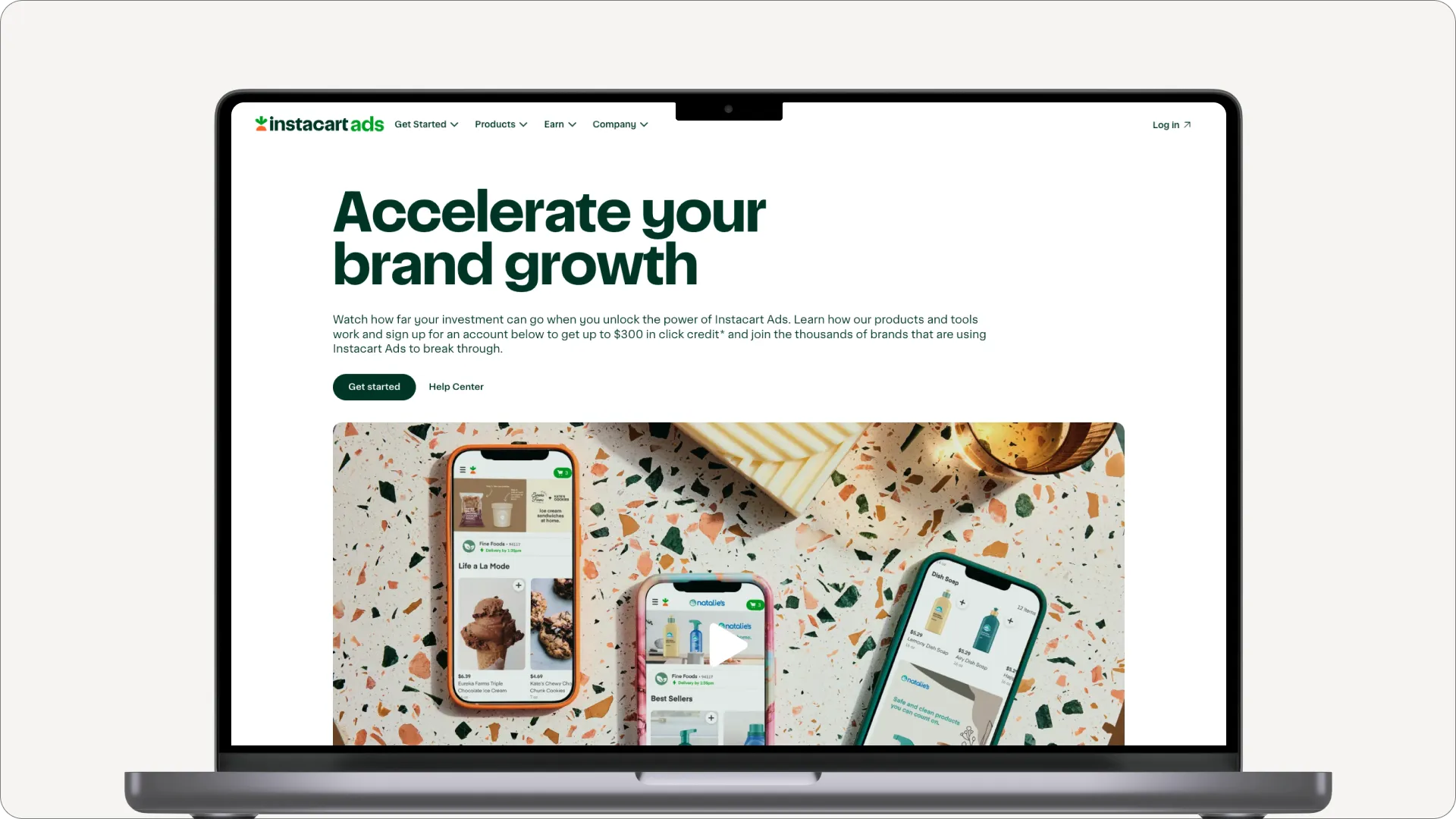
Instacart sits at the intersection of shopping and fulfilment. Customers arrive with a clear goal: build a basket and check out. That makes it an ideal environment for rapid experimentation.
For example, a CPG brand testing a new snack flavour can run sponsored listings on Instacart, targeting shoppers browsing the relevant category. Within days, the brand can measure add-to-cart rates, purchases, and repeat interest.
That signal is immediately actionable. Teams can decide whether to scale the product, refine the proposition, or stop altogether, before committing to production scale or retail rollout.
FAQs: Retail Media Networks and Corporate Venturing
Q. Why are Retail Media Networks outperforming traditional retail channels?
A: RMNs outperform traditional channels because they operate at the moment of intent. Instead of chasing attention, they influence decisions when customers are already searching, comparing, and ready to buy. This reduces friction and increases conversion.
Q. How do RMNs create value for corporate innovators?
A: RMNs give corporate innovators access to live buying behaviour, trusted retail environments, and closed-loop measurement. This allows ventures to validate demand, pricing, and positioning faster, with lower risk and less capital.
Q. Do corporate ventures need to own first-party data to benefit from RMNs?
A: No. Corporate ventures don’t need to own the data. RMNs provide access to transaction-level signals inside retailer ecosystems, allowing ventures to learn from real customer behaviour without building their own data infrastructure.
Q. How do RMNs accelerate venture validation?
A: RMNs compress the test-and-learn cycle by turning retail environments into live proof engines. Ventures can test propositions in-market, measure real purchase behaviour, and make scale or kill decisions quickly.
Q. How should corporate innovators think about RMNs strategically?
A: Corporate innovators should treat RMNs as venture platforms, not ad channels, and decide whether to build, partner, or invest to capture value where buying decisions happen.
What RMNs Mean for Corporate Innovators
RMNs represent a real shift in how corporate innovators can validate new ventures. By combining intent, closed-loop measurement, and in-market experimentation, they make early-stage ideas easier to test and de-risk.
But they are not a shortcut. RMNs still demand rigour: clear hypotheses, disciplined experimentation, and honest interpretation of results.
The innovators who benefit most won’t treat RMNs as a media channel to optimise, but as a learning system to master.
—
Looking to validate a new venture concept? Power every step of your build with real customer data to find the right product–market fit, pricing, and features.
Get the list of 25 Corporate Ventures That Won in 2025
How consumer brands like PepsiCo, Volkswagen, and Amazon go about venturing to find growth beyond their core.


