4 Consumer Behaviour Shifts Shaping Customer Journeys in 2026
Find out how customer journeys are evolving in 2026 and what those shifts mean for corporate venture design, with actionable tips and real-world examples.

In this article
Key takeaways
- Discovery is no longer brand-led: Win by designing for context, not campaigns, and showing up where real problems surface.
- Pure-play journeys are breaking: Hybrid journeys convert when intent carries seamlessly across channels.
- Purchase is only a checkpoint: Retention depends on continuously earning value through usage, flexibility, and control.
- Journey control is an illusion: The real advantage comes from removing friction between decisions.
Customer journeys used to follow a predictable general path: awareness, consideration, purchase and retention. In 2026, that familiar, brand-controlled path to purchase no longer reflects how customers actually move.
Today’s journeys are more fragmented, faster, and far less predictable:
- Relevance comes before awareness. Customers encounter solutions in context, often before noticing the brand.
- Trust is built on the spot. Decisions are made in seconds, driven by “proof moments” rather than comparison.
- Loyalty is continuously reassessed. Value isn’t secured at purchase. It’s earned through ongoing usage, flexibility, and control.
Effective customer journeys now centre on context-led experiences that flow naturally across channels and continue earning their place long after the first transaction. The priority: optimise touchpoints by removing the friction that interrupts purchasing decisions.
To help you understand how customer journeys are evolving in 2026 and beyond, let's take a closer look at four shifts driving this change.
Behaviour Shift 1: Discovery Is No Longer Brand-Led, It’s Context-Led
In 2026 and beyond, customers are no longer “discovering brands” through research; they’re encountering solutions organically.
Traditional Journey |
Emerging Journey |
|---|---|
|
Discovery was brand-led. Customers searched, browsed, or walked into channels designed for exploration. Brands controlled entry points through ads, search visibility, feeds, and retail presence. |
Discovery is context-led. Customers encounter solutions inside AI tools, workflows, communities, and partner ecosystems. Context, not the brand, determines what surfaces. |
The key difference? In today’s customer journey, solution relevance precedes brand awareness, meaning customers encounter and assess solutions before they ever register the brand behind them.
Agentic AI is accelerating this shift even further, with AI assistants increasingly searching, comparing, recommending and even purchasing on behalf of customers and businesses.
In short, brands are increasingly invisible when customers first encounter the solution.
What does this mean for corporate ventures?
Design for context, not campaigns.
Treat discovery as a product and ecosystem design challenge. Focus on where real problems surface, not on how to drive awareness in advance.
Optimise for system mediation.
Design your venture to be recommended, summarised, or embedded by AI systems and platforms you do not control. If it cannot be clearly interpreted by those systems, it will not surface.
Reduce your value proposition to a single sentence.
If an AI or platform had to recommend your venture in one line, that line must survive without explanation, branding, or context.
Measure entry into the journey, not impressions.
Track where and how customers first encounter your venture, especially when that happens outside owned channels. If you don’t know where you surface, you can’t design for discovery.
Example: Google
On Google, solutions surface through AI summaries, local recommendations, and embedded prompts inside Search, Maps, and Workspace tools. This happens organically as users look for products and services to address an immediate need.
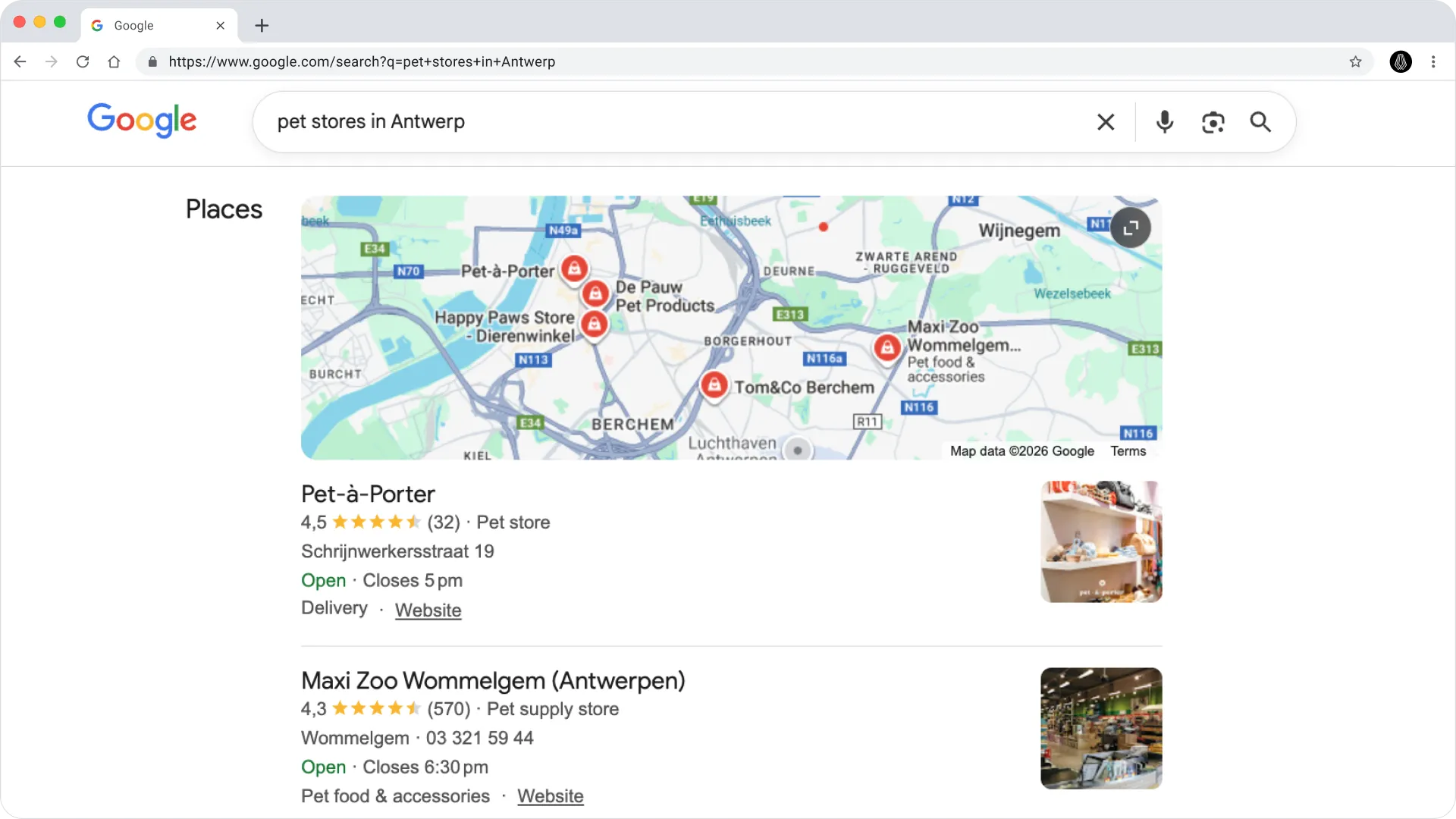
In this example, results surface based on location, reviews, and opening hours, with brand awareness taking a back seat to relevance and proximity.
💡 Key question:
Where does our solution surface through context or systems, rather than deliberate search?
Shift 2: Evaluation Has Collapsed Into Proof Moments
Today’s customers are no longer comparing options across touchpoints; they’re making purchasing decisions in seconds, on a single screen.
Traditional Journey |
Emerging Journey |
|---|---|
|
Evaluation took time. Customers compared options across channels, consumed long-form content, and moved gradually toward a decision. Brands had space to explain, persuade, and build trust. |
Evaluation collapses into proof moments, often in one interaction. Trust is established through “moments of proof”. If proof is not instantly clear, the journey stops. |
A moment of proof is the instant in the journey where the customer decides to move forward without needing further explanation, research, or reassurance.
In this context, proof can be any/all of the following:
- Availability: Can I get this now? Is it real?
- Relevance: Does this fit my exact situation?
- Validation: Do others like me use this?
- Outcome clarity: What will this actually do for me?
- Risk reduction: What happens if this doesn’t work?
Some of the factors fueling this shift include decision fatigue, AI summaries replacing traditional research, and a growing intolerance for ambiguity.
What does this mean for corporate ventures?
Design for instant proof, not explanation.
Assume you have one screen and a few seconds to earn trust. Front-load the signals that reduce doubt: availability, relevance, validation, and outcome clarity.
Treat evaluation as a product moment, not a marketing phase.
Proof must be embedded in the experience itself, not delivered through content, campaigns, or follow-up touchpoints.
Prioritise confidence over completeness.
Customers don’t need all the information. They need enough certainty to move forward. Anything that delays that decision creates friction.
Measure decision speed, not engagement depth.
Track how quickly customers move from first encounter to action. Long evaluation cycles are no longer a sign of interest. They’re a warning sign.
Example: Amazon
On Amazon, evaluation rarely unfolds over time. Most purchase decisions happen in one interaction. Reviews, delivery speed, and return policies remove most of the doubt upfront. One screen is usually enough to move forward or move on.
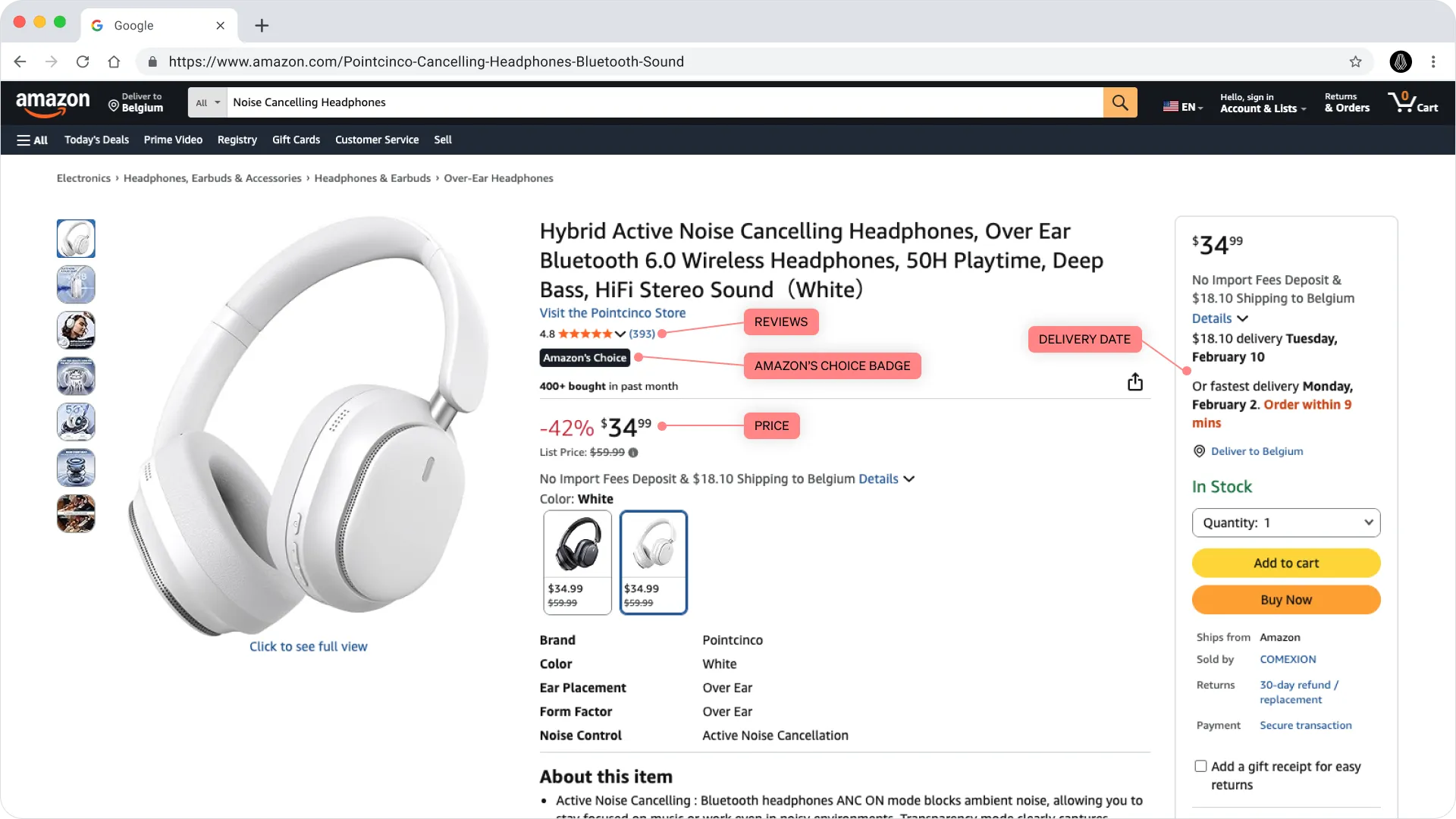
In the example above, the product view surfaces multiple proof points at once, including price, delivery date, reviews, and the “Amazon’s Choice” badge. This creates trust and compresses discovery, evaluation and purchase into a single decision moment.
💡 Key question:
What makes the customer confident enough to act in seconds?
Shift 3: Conversion Has Become Channel-Agnostic
Customers are moving seamlessly across channels, from online discovery to offline confirmation, with an expectation of instant fulfilment and digital follow-up.
Traditional Journey |
Emerging Journey |
|---|---|
|
Conversion was channel-led. Customers were expected to complete the journey either online or offline, through D2C or retail, physical or digital. Each channel was designed with clear handoffs and ownership. |
Conversion is hybrid by default. Customers expect online discovery, offline confirmation, instant fulfilment, and digital follow-up to work together. The journey flows across channels without resetting intent. |
So what makes hybrid journeys convert more than traditional “pure-play” journeys? Pure-play models often force a hard stop or handover, e.g.:
- They find something online, but can’t confirm or access it offline
- They talk to a store, agent, or partner who has no context of what happened before
- They have to repeat information, re-search, or re-decide
- Availability, pricing, or terms suddenly change
This stalls the customer journey, resulting in a loss of momentum: effort increases, uncertainty rises, trust erodes. Hybrid journeys work because intent flows across touchpoints without friction.
What does this mean for corporate ventures?
Stop designing channels. Design continuity.
Treat the journey as one flow, not a set of touchpoints. Conversion depends on whether intent and context survive every handover.
Make handovers invisible to the customer.
Customers shouldn’t notice when they move from online to offline or from physical to digital. Any visible transition is friction.
Carry intent across the journey by default.
Design systems so preferences, selections, and decisions follow the customer automatically, without being re-entered.
Guarantee access before you scale demand.
If customers can’t confirm availability, pricing, or delivery across channels, no amount of traffic will convert.
Example: Nike
Nike designs journeys that flow across channels. Customers often start digitally, through content, apps, or community, then move to stores to confirm fit or availability. Fulfilment and follow-up then happen seamlessly across channels through membership and apps.

💡 Key question:
Where does the journey break when customers move between channels?
Shift 4: The Journey No Longer Ends at Purchase
For a long time, success was measured at purchase. Today, customers continue to evaluate value long after the transaction is complete.
Traditional Journey |
Emerging Journey |
|---|---|
|
Conversion was treated as the finish line. Success was measured at purchase, with loyalty and retention handled later as a separate layer. |
Purchase is a checkpoint, not the end. Customers continuously reassess value through usage, flexibility, and ongoing relevance. |
While traditional journeys assumed commitment after purchase, today, brands are increasingly working to retain customer loyalty post-purchase, e.g. :
- Evaluation continues immediately and continuously
- Usage, flexibility, and control become decision signals
- Customers reassess value with every interaction
- Churn risk appears early, long before cancellation
In other words, retention is going from reactive to proactive.
What does this mean for corporate ventures?
Design retention into the core experience, not as a loyalty add-on.
Points, emails, and rewards won’t compensate for weak ongoing value. Usage, flexibility, and control must be designed into the product itself.
Use early usage signals as leading indicators.
Drop-off, friction, or lack of engagement shortly after purchase signal value gaps long before churn shows up in dashboards.
Give customers visible control after purchase.
Easy changes, pauses, adjustments, or exits increase confidence and reduce regret, even when customers don’t use them.
Measure ongoing value, not just repeat transactions.
Track whether customers keep choosing the venture over time, not just whether they buy again.
Example: Starbucks
Starbucks uses its app and loyalty ecosystem to continuously assess and create value post-purchase. Signals like location, time of day, weather, and recent behaviour trigger personalised prompts and offers, often before the customer actively decides to visit. For example, if there is a heatwave, the app might surface cold drink recommendations.
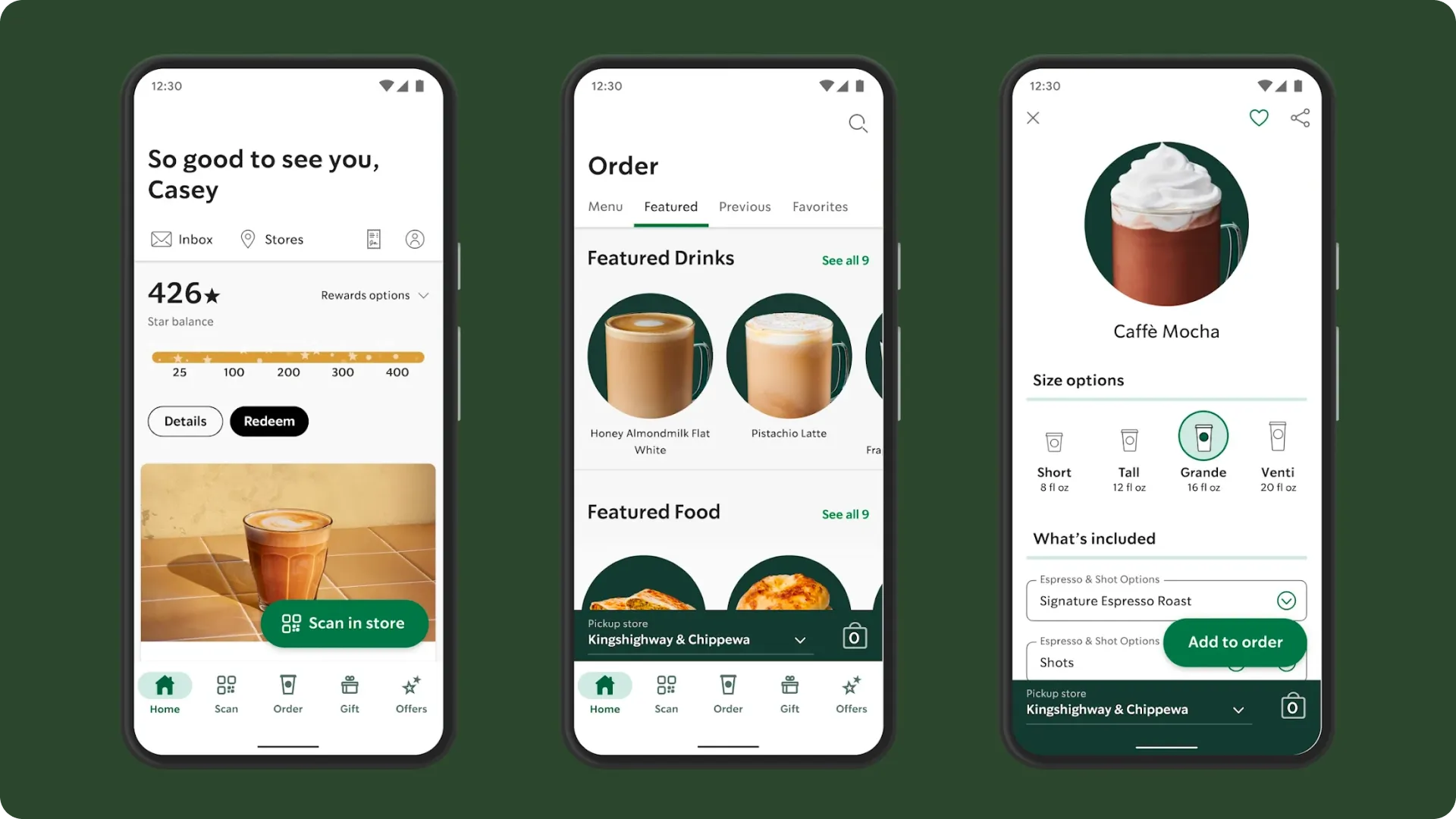
Engagement is another data point that is carefully monitored after the sale. A drop in app usage could signal early churn, allowing Starbucks to intervene before the habit breaks.
💡 Key question:
What makes the customer stay after the first use?
Designing for Journeys You Don’t Fully Control
Customer journeys in 2026 are fragmented, fast, and largely out of your control. They start in many places, hinge on a single proof moment, move across channels, and continue well beyond purchase.
For corporate innovators, this changes the role of journey design entirely. It’s no longer about controlling every step, but about removing the friction that interrupts purchase decisions.
—
Join 300+ senior corporate entrepreneurs in the Bundl Venture Club for more insights, frameworks, and decisions in live, peer-led discussions.

Define your venturing strategy
Bring this into your own organisation with a team that has done it inside the world’s biggest consumer brands. Fifteen years, fifty-plus partners.
See the capability